The full talk notes
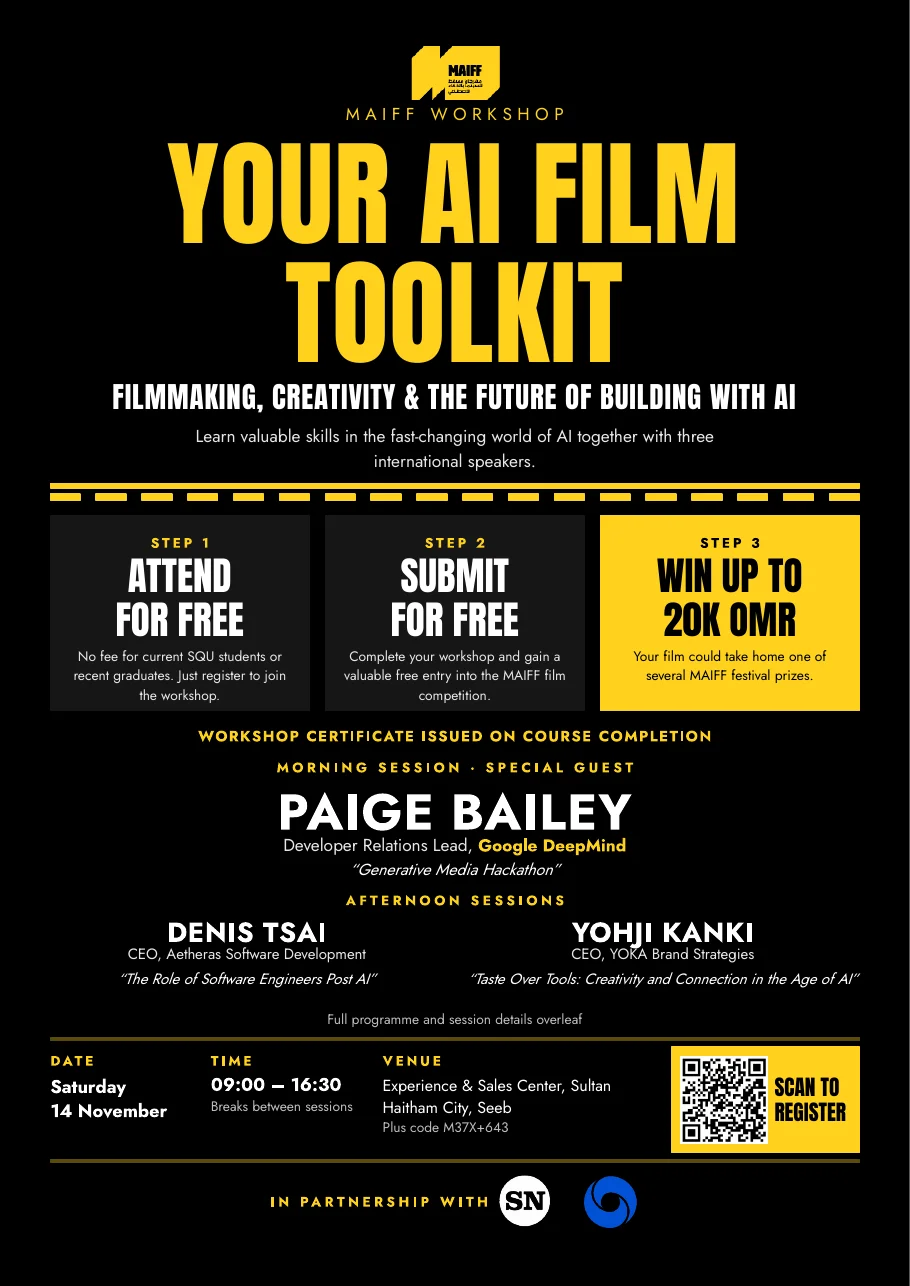
These notes come from Taste Over Tools: Creativity and Connection in the Age of AI, Yohji Alexander Kanki's session at Your AI Film Toolkit, a Muscat AI Film Festival (MAIFF) workshop held in partnership with Google DeepMind on 14 November 2026 at the Experience & Sales Center in Sultan Haitham City, Seeb, Oman.
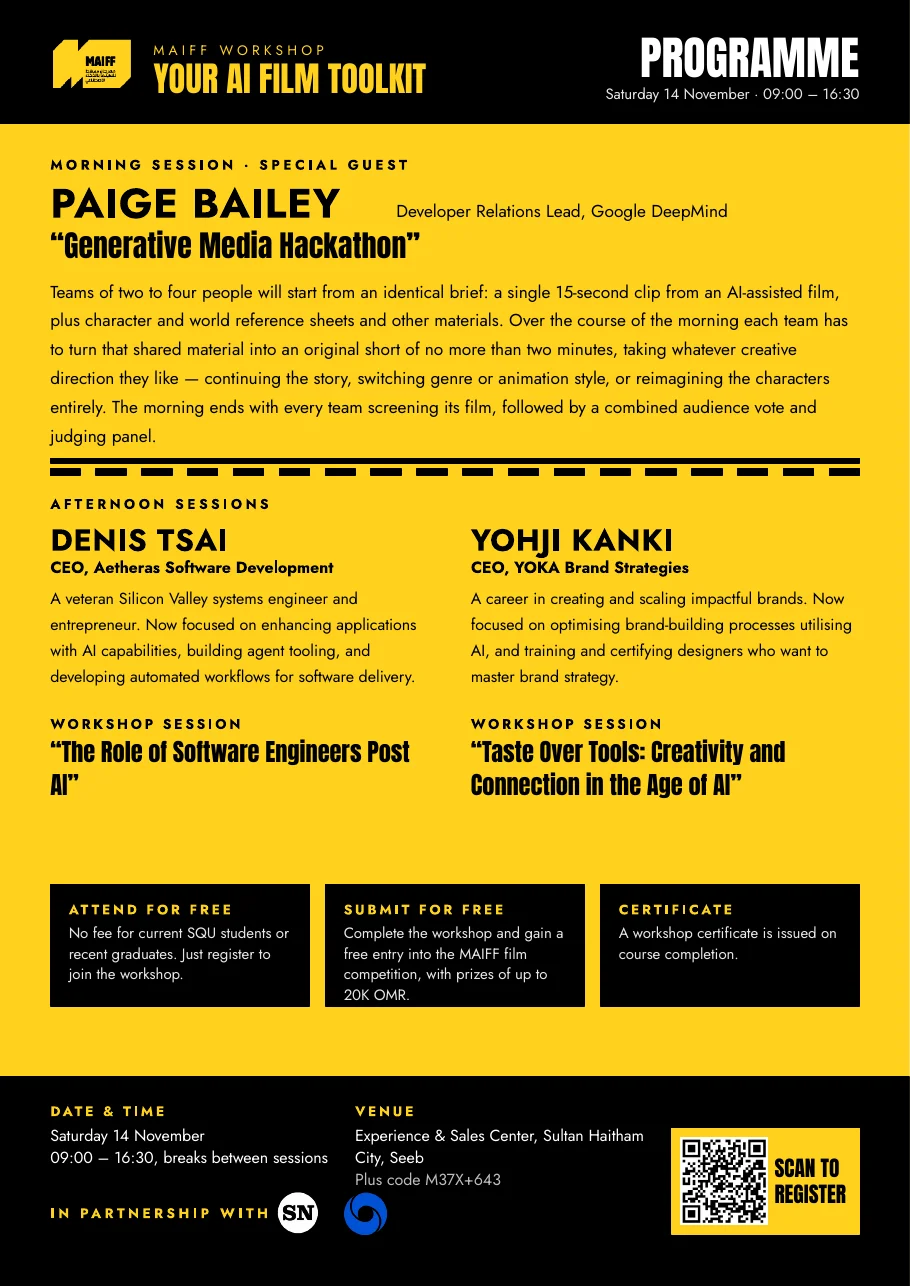
The day opened with a Generative Media Hackathon led by special guest Paige Bailey, Developer Relations Lead at Google DeepMind. Teams of two to four started from the same 15-second clip of an AI-assisted film, plus character and world reference sheets, and turned it into their own short of up to two minutes, then screened it for an audience vote and a judging panel. In the afternoon, Denis Tsai, CEO of Aetheras Software Development, spoke on the role of software engineers after AI, followed by Yohji's session.
MAIFF is built on a clear principle: AI is a tool to support creativity, with people and stories at the centre (Oman Observer). With a room of computer science students, filmmakers, creatives and government teams, and Yohji as the only speaker of the day who doesn't write code, his session focused on the human side.

Is AI the new printing press?
Around 1440, in the middle of the Renaissance, the printing press arrived in Europe. Within about a century, books went from rare to everywhere. Finding information stopped being hard. Finding something worth reading became the problem.
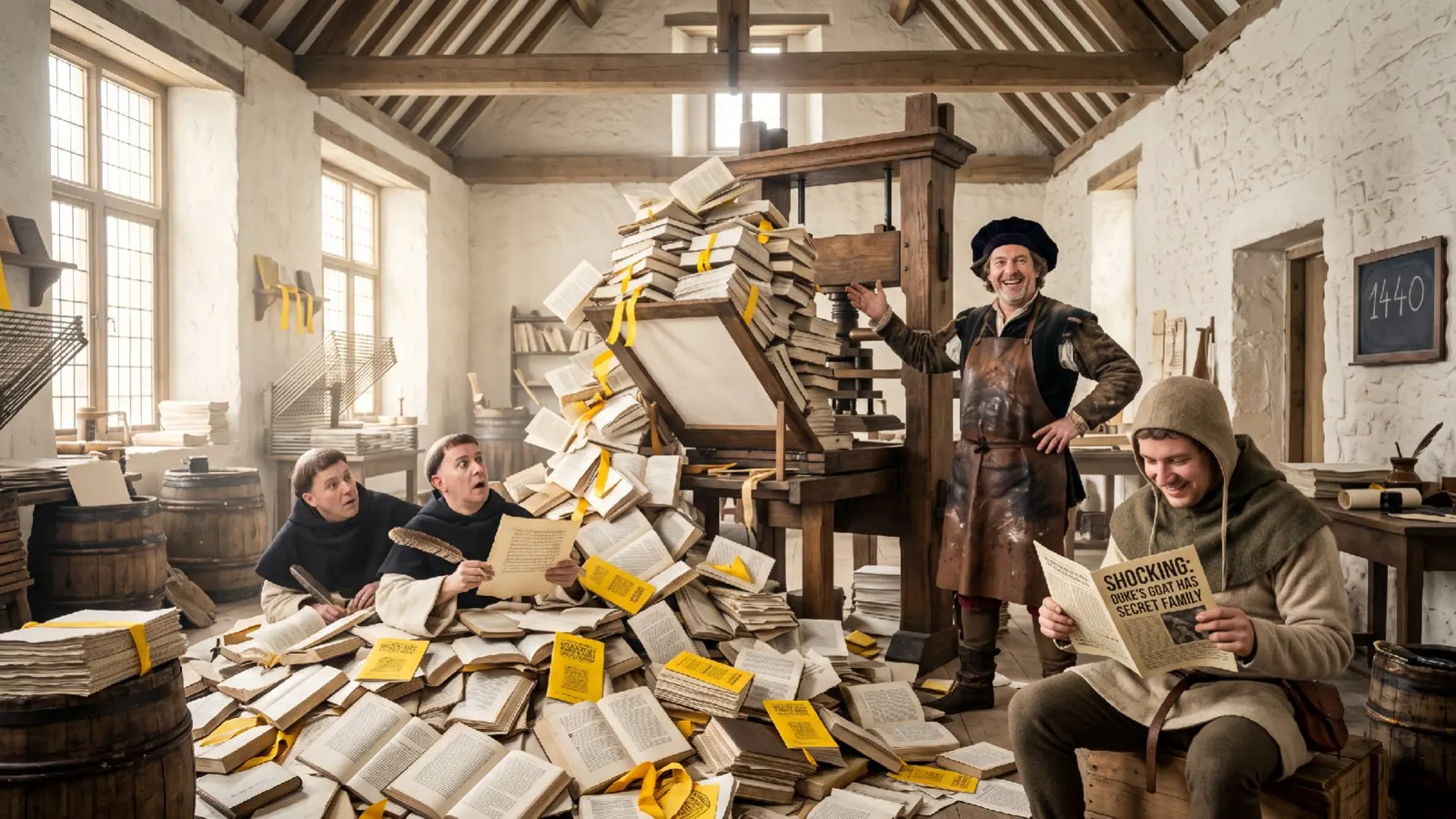
Most of what was printed back then is forgotten. What we still queue for in museums are the works people poured years into. Real art and knowledge outlived the endless pamphlets.
AI is our printing press. Many companies believe the next era belongs to whoever makes the most content, the fastest. That is the same mistake people made 500 years ago. The next renaissance won't go to whoever makes more. It will go to whoever makes people care.
Will AI replace storytellers and filmmakers?
Not the part that matters. Five questions sit behind all communication, in film, in companies and in life: how, where, when, what and why. In the last few years AI changed how we make things, where people watch, how fast it all happens and what's even possible. It didn't change the why. AI made the how easier. It can't give you the why.
Story is what you say. Connection is what they feel.
AI can make a film look amazing. But people can sense when nobody was really behind it, and audiences already have a name for the result: AI slop. More output is not more meaning. Two flyers can sell the same fish, and only one makes you hungry.
Even in tech the mood has shifted. OpenAI president Greg Brockman has called taste "a new core skill" (The Star). When anyone can produce, the edge moves to knowing what is worth producing.
The milk test
If I start a milk company today, do I have a brand tomorrow? No. I can say I'm the best milk in the world. Until other people believe it and say it for me, I don't have a brand. Shouting louder, or generating more ads, doesn't change that. (More on this in What is branding?)
People connect with people. The flyer gets scrolled past. The person behind the counter is who you come back for. Use AI to support that connection, never to replace it.
How does generative AI actually work?
Try this. Finish these in your head: "Tom and…", "Lights, camera…", "Peanut butter and…".
You didn't think. You predicted. That is, in simplified form, what an AI model does: it guesses the most likely next piece, over and over, at enormous speed.
- Text: chat models like ChatGPT are guessing the next words.
- Code: Claude is guessing the next line of code.
- Images: models like Nano Banana are guessing the pixels.
It is a simplified view, but a useful one. It explains why AI sounds confident even when it's wrong, and why AI models are tools, like a hammer: great in the right hands, useless without someone who knows what to build.
Before you replace Google with ChatGPT
- Research the important steps yourself. Use AI to go faster, not to skip the parts that matter.
- Ask for sources. Then open them. A confident answer is not a correct one.
- Review critical outputs. Anything with your name on it gets read by a human first.
How to make a film with AI: a step-by-step example
To show the process, Yohji built a film concept from scratch for the session: The Pengolyn, a superhero born from two ideas, a penguin and a classic caped hero. Here is the workflow, which works for any short film, ad or music video:
- Start from something real. Not a prompt. The Pengolyn grew out of the Yoka brand colours: yellow, black and white.
- Combine two ideas into one concept. Penguin plus superhero became a character, a name and a title treatment.
- Lock the character. One character sheet, every angle, so the face and the suit stay identical from the first shot to the last. Skip this and every new image drifts a little further.
- Write the style bible. One sentence sets the world: "A bright, near-monochrome world where one electric yellow burns through every frame like a signal." Then define palette, light, texture, camera, composition and story. Every prompt inherits the same rules.
- Make keyframes. Still frames that set the look of every shot.
- Add sound. Score and sound design, made with tools like Suno and ElevenLabs.
- Turn keyframes into motion. Video models animate the stills, shot by shot.
- Edit in what you already know. Premiere Pro, DaVinci Resolve, Final Cut Pro or even iMovie.
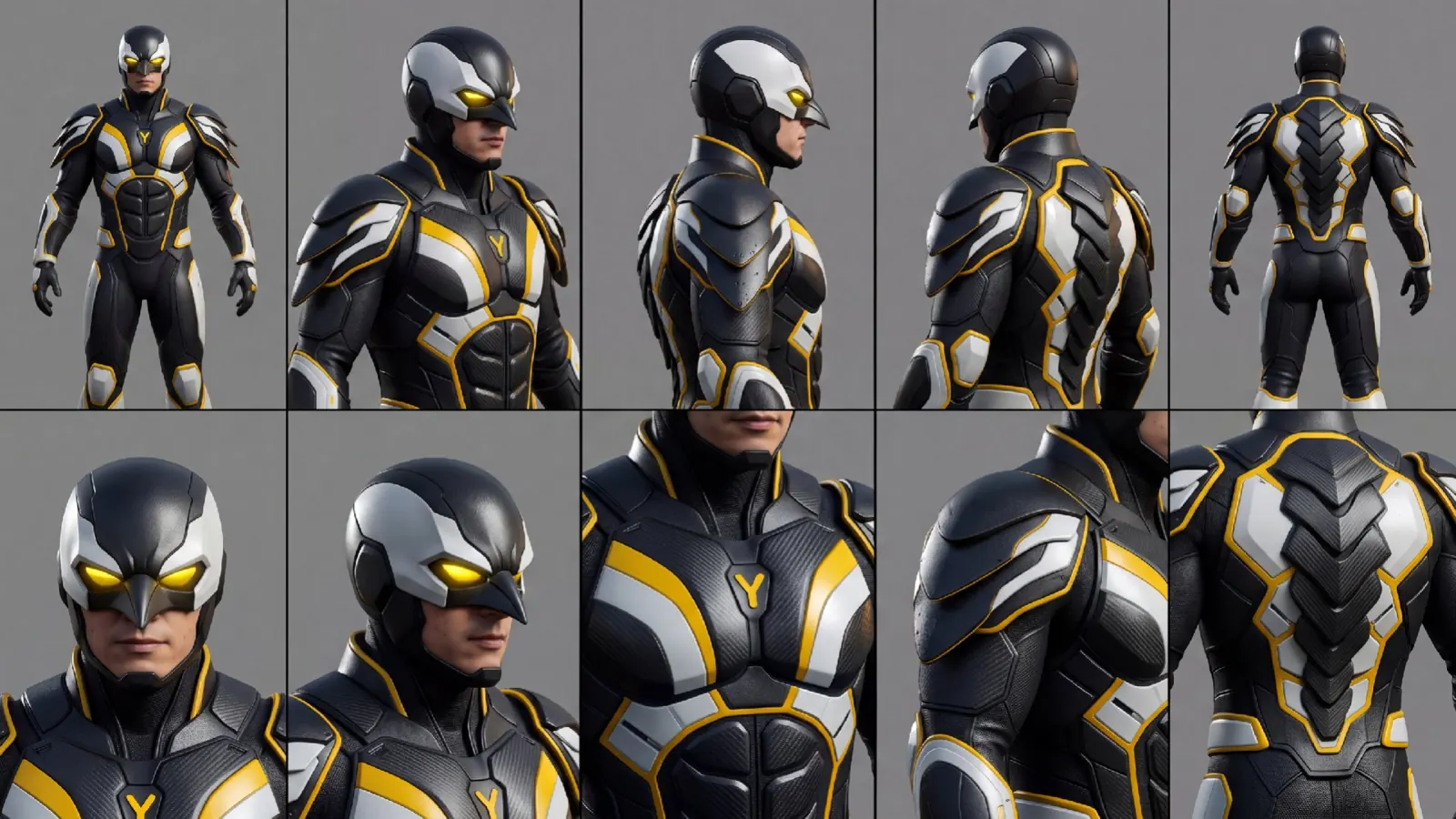
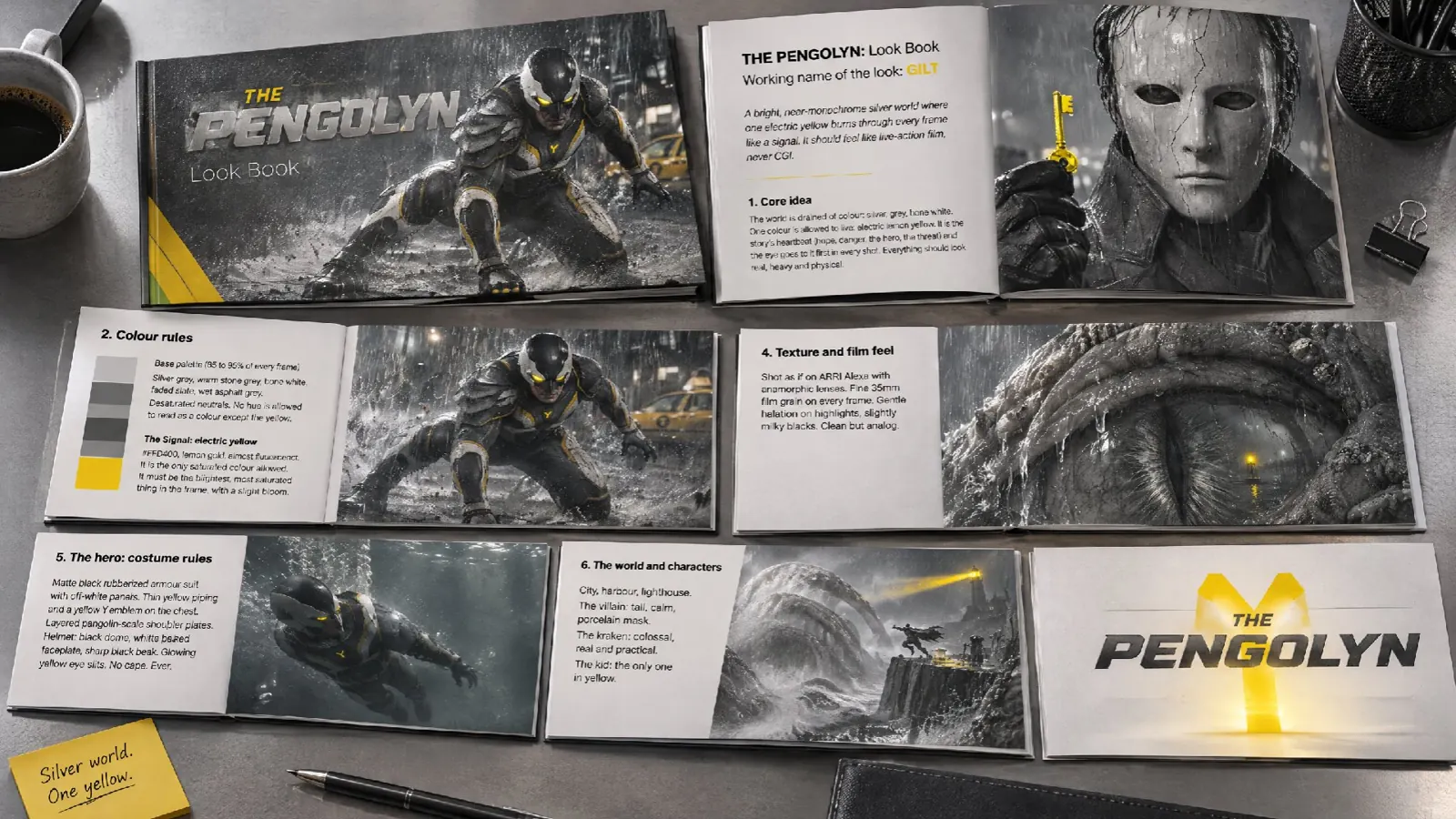
Consistency is more than visual. Most people only think about the look, but audiences also remember how something sounds and feels: voice, tone, music, light. Lock those too.
The result: a 45-second teaser
Every shot, voice and sound effect below was made with AI tools, then cut together by hand. Turn the sound on.
Let the tools talk to each other
Claude can write small scripts (JSX) that automate work inside Adobe apps like Premiere Pro, After Effects, Illustrator and Photoshop. Connected through MCP, Claude can also run Blender and Higgsfield in one loop: build a 3D scene, render it, restyle it, adjust the scene and go again.
Promote it in ways that weren't possible before
The Pengolyn got a bus-stop poster concept in Muttrah with a QR code, an app concept, personalised cinema tickets and a full playable browser game. The game was built with Claude without writing code by hand: a rain-soaked harbour city, the hero from the film, seven masked men to take down and a free cinema ticket for anyone who wins.
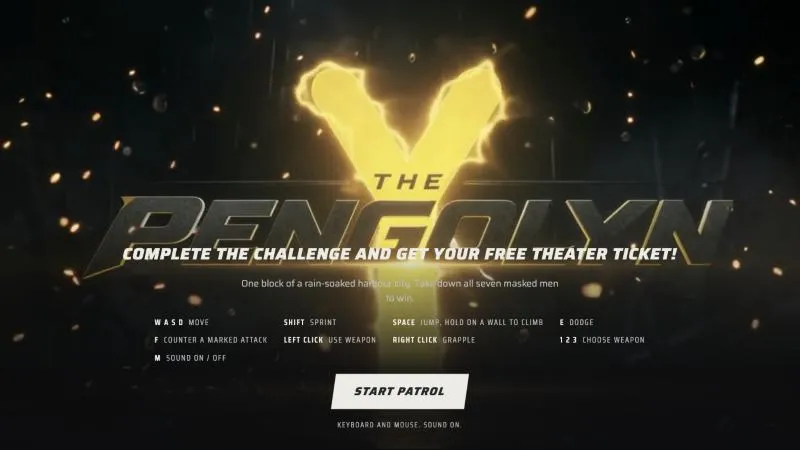
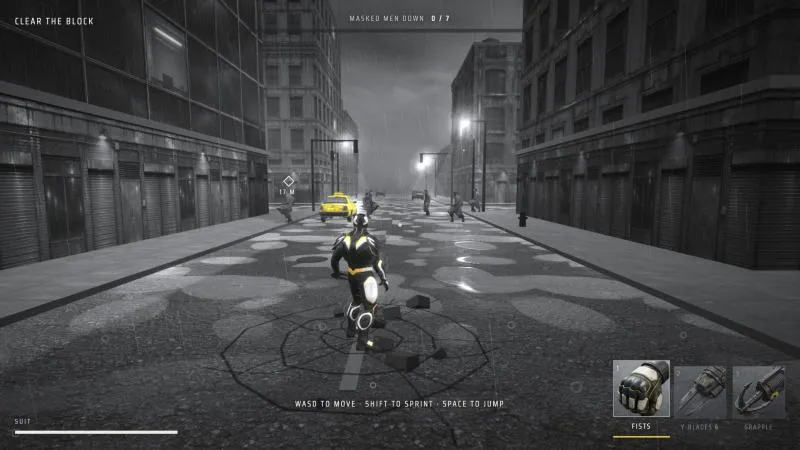
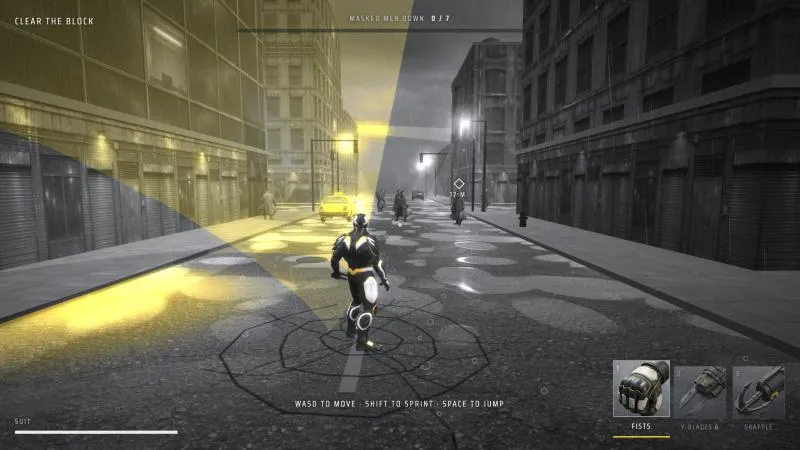
Play it in your browser at pengolyn.pages.dev. It works with keyboard and mouse.

Explore impossible styles
A look that once needed a specialist studio and months of work can now be tested in an afternoon: handmade stop-motion, layered paper cut, or Muscat rebuilt as a glass miniature.

A real-world example: Greater Muscat
The same workflow works far beyond fiction. To show it on a real place, Yohji made a 40-second film around Greater Muscat: the mountains and coastline, a future waterfront and the bilingual Greater Muscat identity, all made with AI. A vision people can actually see moves a room faster than a masterplan on a table.
Which AI tools are worth knowing for film? (November 2026)
Pick the right tool for the job. This is the landscape as of the session:
| Job | Tools |
|---|---|
| Chat and reasoning | ChatGPT, Claude, Gemini, Grok, DeepSeek |
| Images | Nano Banana 2.1, GPT Sunburst 2.6, Seedream 5.5, Ideogram 4.5 |
| Video | Seedance 2.5, Gemini Omni 1.2, Minimax 3.0, Kling 4.0 |
| Sound | Suno for music, ElevenLabs for voice and effects |
| All in one place | Higgsfield, which bundles leading image and video models in one subscription and connects to Claude through MCP |
Run the same prompt through several models and you get very different results, so test before you commit. And remember: these names will be old by next year. The way of working won't be.
The Pengolyn toolkit
- Claude for planning, writing, scripts and running the other tools through MCP
- Higgsfield for image, video and 3D generation across models
- Blender for 3D scenes and camera blocking
- Suno and ElevenLabs for score, voice and sound effects
- Cloudflare Pages to host the browser game for free
What not to do with AI
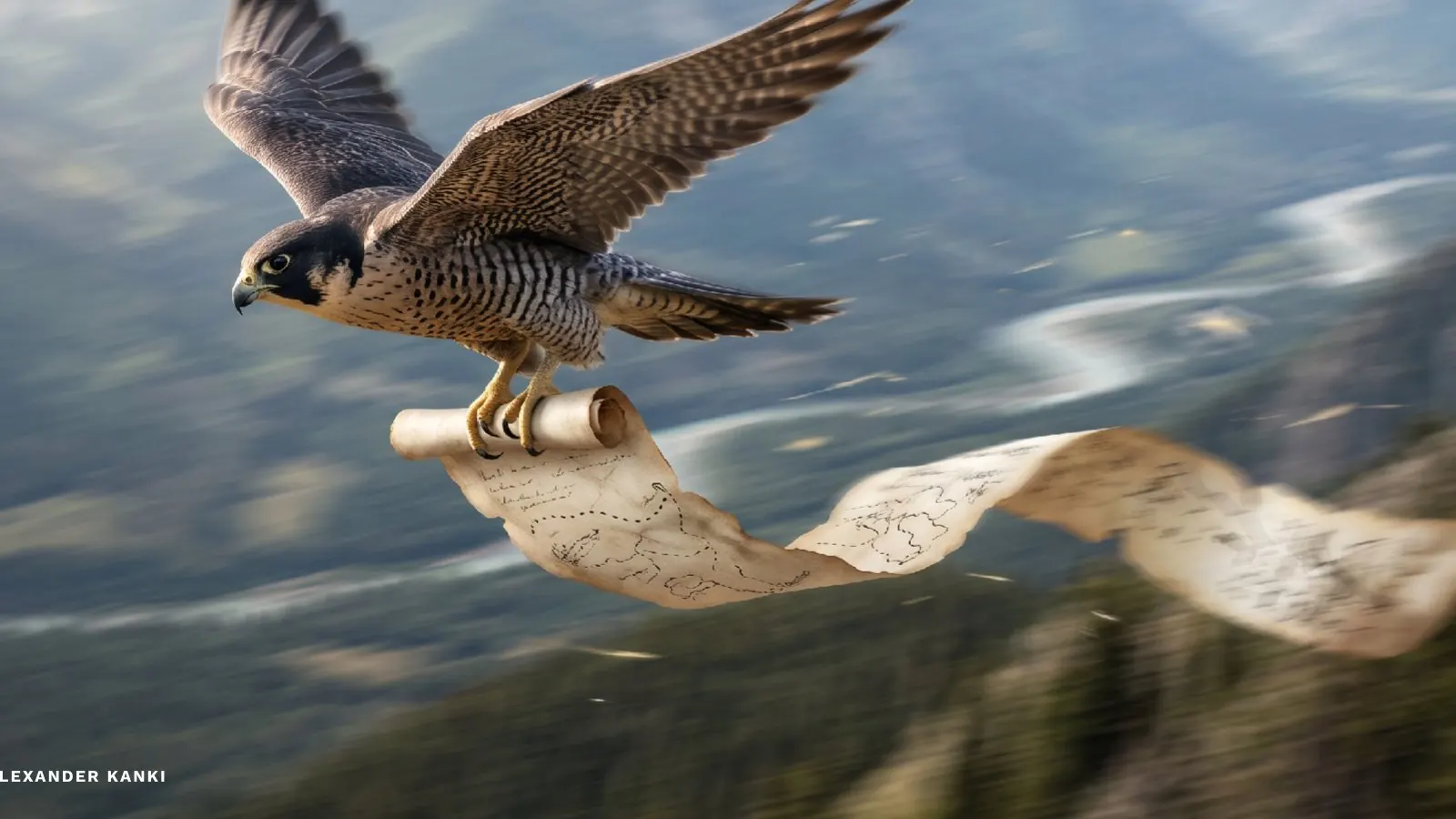
AI should make your message shorter, not longer. Sending someone your whole conversation with ChatGPT is like sending a falcon carrying a giant scroll. Nobody has time to read your chat with an AI. The goal of a message is to get the point across fast, not to hand over your research.
Three habits to drop:
- "Make it better." AI doesn't know what better means to you. Say what you actually want: shorter, warmer, more direct.
- Copy, paste, publish. "Certainly! Here's a heartfelt message…" has ended up in real posts. Read every word before it goes out.
- Eight paragraphs that should be one sentence. Edit down, not up.
What's next for AI in film and creative work?
Every new tool started a panic. In 1839, as photography arrived, a line usually attributed to the painter Paul Delaroche declared painting dead. In 1927, talking pictures were going to ruin cinema. In 1990, Photoshop made people ask whether a photograph could still be trusted. Each time, the argument faded and the tool became normal. Today's big question, "is it AI or not?", will fade too.
Three predictions:
- The AI label disappears.
- The tools fade into the background, just like spellcheck did.
- Taste, story and connection are what's left to compete on.
The tool you're waiting for will come. Progress never arrives suddenly or out of nothing. If you build a foundation in today's models, processes and use cases, stepping into the next one will be far easier. And not every part of your film needs AI. You decide where it serves your story, and where your own hands do it better.
What will you make with it?
A room full of people with this skill set can tell stories only they can tell: country branding, local craft, the companies of their own city. The models will keep getting better. What you make with them is up to you.
AI filmmaking: common questions
What was the Your AI Film Toolkit workshop at MAIFF?
A one-day Muscat AI Film Festival workshop on 14 November 2026 in Sultan Haitham City, Seeb, Oman, held in partnership with Google DeepMind. Paige Bailey, Developer Relations Lead at Google DeepMind, led a Generative Media Hackathon in the morning. In the afternoon, Denis Tsai spoke on software engineering after AI and Yohji Alexander Kanki gave Taste Over Tools: Creativity and Connection in the Age of AI.
What does "taste over tools" mean?
When AI makes production cheap and fast for everyone, the advantage moves from knowing the tools to judgment: knowing what is worth making, what to cut and what feels true. Tools change every few months. Taste compounds.
Will AI replace filmmakers?
AI is taking over parts of production, not the reason people watch. Audiences connect with intention and with people. Festivals like the Muscat AI Film Festival explicitly treat AI as a tool that supports creativity, with people and stories at the centre.
How do I start making a film with AI?
Start from a real idea, combine it into one concept, lock your character with a character sheet, write a short style bible, create keyframes, add sound, animate shot by shot and edit in software you already know.
How do I keep an AI character consistent across shots?
Create a character sheet showing the character from every angle, write a style bible with fixed rules for palette, light and camera, and reuse the same reference images in every prompt.
What is AI slop?
Generic, low-effort AI content published without a clear purpose or human judgment. Audiences spot it quickly, and it erodes trust in whoever posts it.
Which AI tools are best for filmmaking in 2026?
As of November 2026: Nano Banana, Seedream, GPT Sunburst and Ideogram for images; Seedance, Kling, Minimax and Gemini Omni for video; Suno and ElevenLabs for sound. Platforms like Higgsfield bundle many models in one place. Test per shot, and expect the list to change.
How does generative AI work, simply explained?
It predicts. A language model guesses the most likely next word, a coding model the next line, an image model the pixels, over and over at high speed. That is why it can sound confident while being wrong.
Sources and further reading
- Oman Observer, Muscat launches AI film festival to drive cinema, creativity
- The Star, Is taste the one thing AI can't replace?
- The Pengolyn browser game, pengolyn.pages.dev
- Google DeepMind, workshop partner
- Paige Bailey, Developer Relations Lead, Google DeepMind
Want the next one in your inbox? Subscribe for future updates.